Choosing a new kitchen involves many decisions, but one of the most important is the overall style. The cabinetry, materials, colours and detailing all contribute to how the finished room will feel. With a fitted kitchen designed specifically for your home, there is considerable flexibility in the choices available. Two of the most popular approaches are Shaker and contemporary kitchens. Shaker kitchens are recognised for their considered proportions and distinctive framed and panelled doors, while contemporary kitchens tend towards cleaner lines and simpler detailing often with flat faces to the doors. Both can work particularly well in modern homes, and both can be tailored around individual tastes and practical requirements. At Treske, we believe the right choice is not simply about choosing between traditional and modern. It is about understanding the character of your home, how you want the kitchen to feel and, more importantly, how you will use the space every day.Shaker vs Contemporary Fitted Kitchens: Which Style is Right for You?
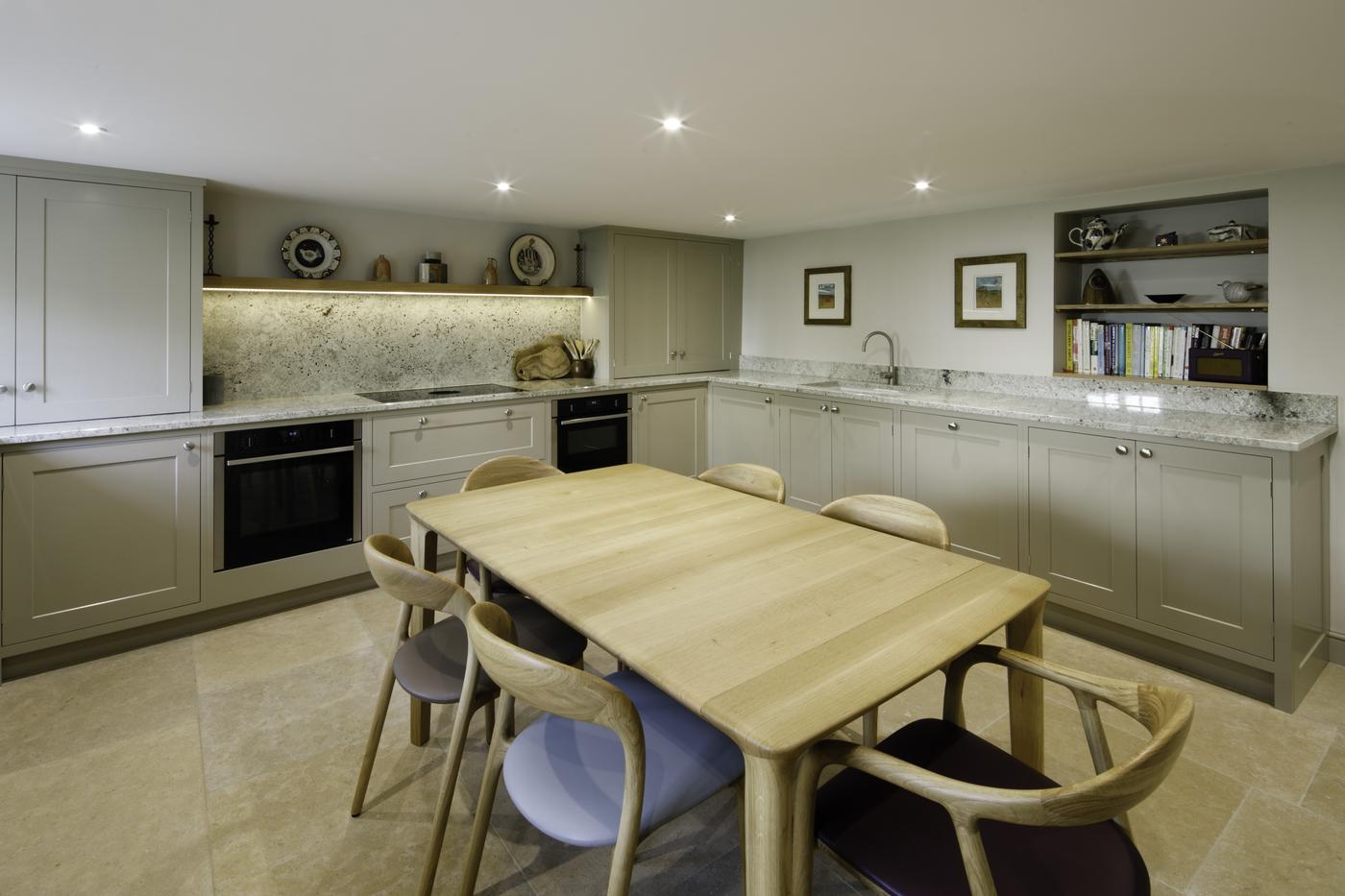
luxury shaker kitchen
What is a Shaker kitchen?
Shaker kitchens are defined by a relatively simple style of cabinetry, most recognisably a framed door with a recessed centre panel. Although the design has traditional origins, its simplicity means it can sit comfortably in a wide variety of interiors.
This versatility is an important part of the appeal of luxury Shaker kitchens. Different colours, handles, worktops and other finishes can significantly change the character of the cabinetry. A more traditional combination like our project in Rainton, can complement a period property, while carefully chosen colours and contemporary fittings can give the same underlying style a fresher, more modern appearance, like in our Townhouse project.
For homeowners who want a kitchen with visible craftsmanship and detail without creating a space that feels overly decorative, Shaker cabinetry can provide a useful balance.
What defines a contemporary fitted kitchen?
Contemporary fitted kitchens generally take a more streamlined approach. Clean lines, simple cabinetry and restrained detailing can help create a calm, uncluttered space, particularly when storage and appliances are carefully integrated into the overall design.
Rather than drawing attention to individual decorative details, a contemporary kitchen often allows the proportions, materials and layout of the room to take greater prominence.
This does not mean contemporary kitchens need to feel stark or minimal. Timber, colour and different finishes can all introduce warmth and character. Because a bespoke kitchen is designed around the individual client, there is considerable scope to decide just how simple or distinctive the finished design should be. Take a look at our Fulford Kitchen project for some inspiration.
Possibility for a section to discuss the opportunity of real wood veneers within a contemporary kitchen to give different decorative effects - the Fulford kitchen is an example
Which style works best with your property?
The architecture and character of the property are useful places to start when considering kitchen style, but they do not necessarily dictate the answer.
Shaker cabinetry can be particularly at home in period properties, country homes and interiors where traditional architectural details are already present. The proportions and detailing of the doors can complement these surroundings while still allowing modern appliances, storage and other practical features to be incorporated.
Contemporary kitchens can work particularly well in newer properties, extensions and open-plan spaces, where simple cabinetry can complement clean architectural lines.
However, there is no requirement for the age of the house and kitchen to match. A contemporary kitchen can provide an effective contrast within an older property, just as a carefully designed Shaker kitchen can introduce character and warmth into a modern home.
The important consideration is how the kitchen relates to the wider interior rather than following a fixed rule.
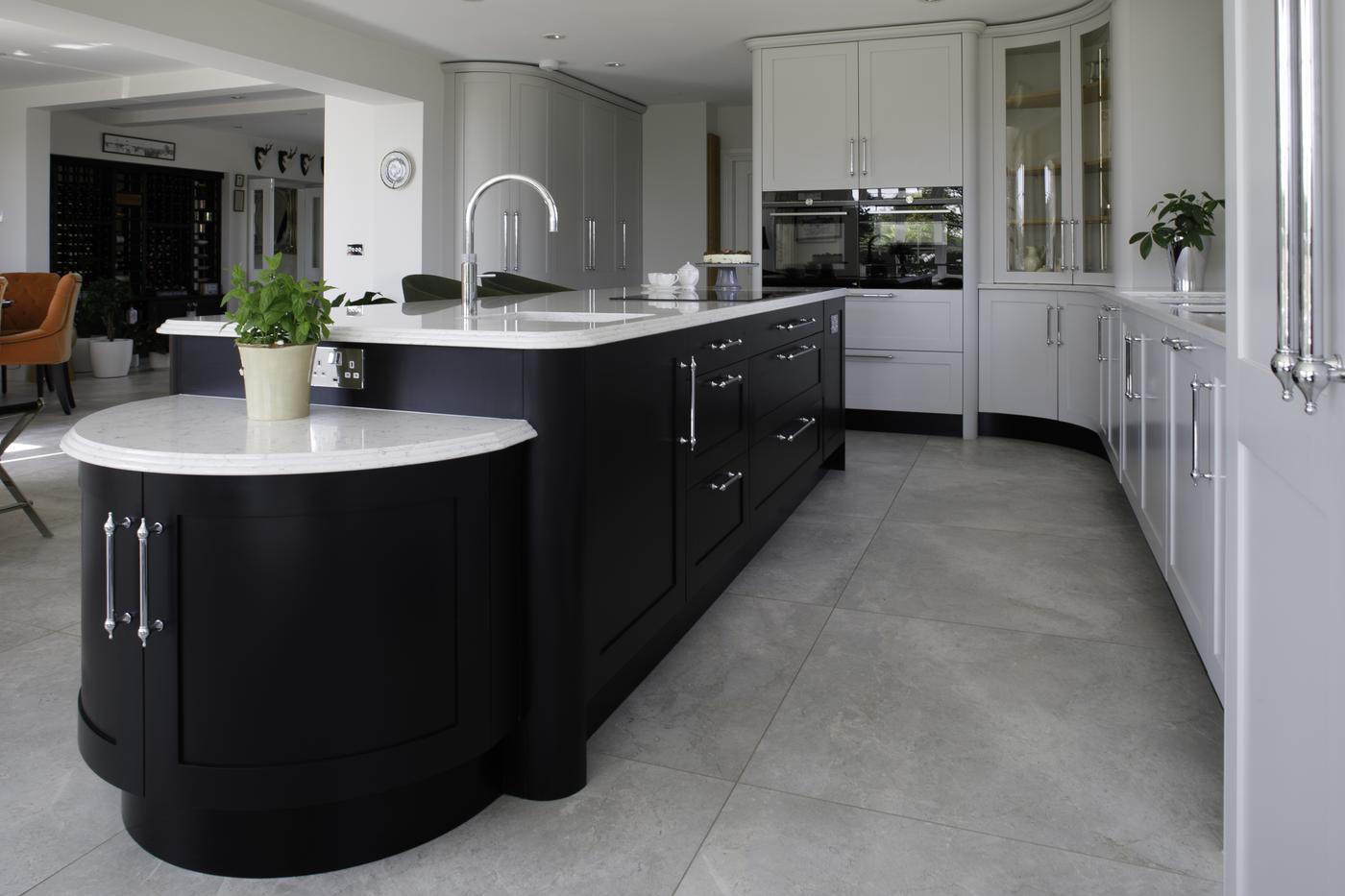
Belmont Luxury Bespoke Kitchen
How much difference do colour and materials make?
The choice between Shaker and contemporary is only one part of the design process. Colour, timber, worktops, handles and other materials can all have a significant effect on the finished result.
For example, Shaker cabinetry does not have to mean a traditional painted kitchen. Different finishes and details can create a much more contemporary interpretation of the style.
Likewise, modern cabinetry does not have to rely on neutral colours or highly polished surfaces. Natural timber and carefully considered colour can soften simple lines and help the kitchen sit comfortably alongside the rest of the home.
This is where a bespoke approach provides greater flexibility. Rather than choosing a predetermined combination of doors, colours and finishes, the individual elements can be considered together so that the finished kitchen feels appropriate for the room and the client.
Think about how you use your kitchen
Appearance is important, but a successful kitchen also needs to work well.
Before deciding between styles, it is worth considering how the kitchen will be used from day to day. A busy family kitchen may require generous, easily accessible storage and clear work surfaces. Someone who enjoys entertaining may want the kitchen to remain connected to dining and living areas. Keen cooks may have very different priorities around preparation space, appliances and storage.
These requirements can influence everything from the layout and size of cupboards to the position of appliances and internal organisation.
With bespoke fitted kitchens, these practical considerations form part of the design from the beginning. Storage can be planned around what actually needs to be kept in the kitchen, rather than asking the household to adapt to predetermined cabinet sizes and layouts.
Shaker or contemporary: which is more timeless?
It can be tempting to choose a kitchen according to what feels current, particularly when there is so much inspiration available. However, a kitchen is a significant investment and should continue to feel appropriate for many years.
Both Shaker and contemporary kitchens can have longevity when they are designed with careful proportions, quality materials and the wider home in mind.
Shaker cabinetry has endured precisely because its basic design is relatively restrained. Contemporary kitchens can be equally lasting when simplicity and good proportions take priority over short-lived design trends.
When considering luxury kitchens, longevity is therefore about more than choosing one particular style. Materials, craftsmanship and thoughtful design all contribute to a kitchen that continues to work practically and visually over time.
Can you combine Shaker and contemporary design?
The distinction between Shaker and contemporary kitchens does not always need to be absolute.
A Shaker kitchen can incorporate contemporary colours, worktops and fittings, creating a design that retains some traditional character while feeling appropriate for a modern interior - just like our Ripon Kitchen project. Similarly, a predominantly contemporary kitchen can introduce timber and other warmer materials to give the room greater texture and character - as seen in our Wynyard kitchen design at a home in Gerrards Cross.
This flexibility can be particularly useful when designing a kitchen for a property that combines old and new architecture, such as a period house with a contemporary extension.
A bespoke design allows these choices to be considered as part of the whole room rather than requiring the kitchen to fit neatly into a single style.
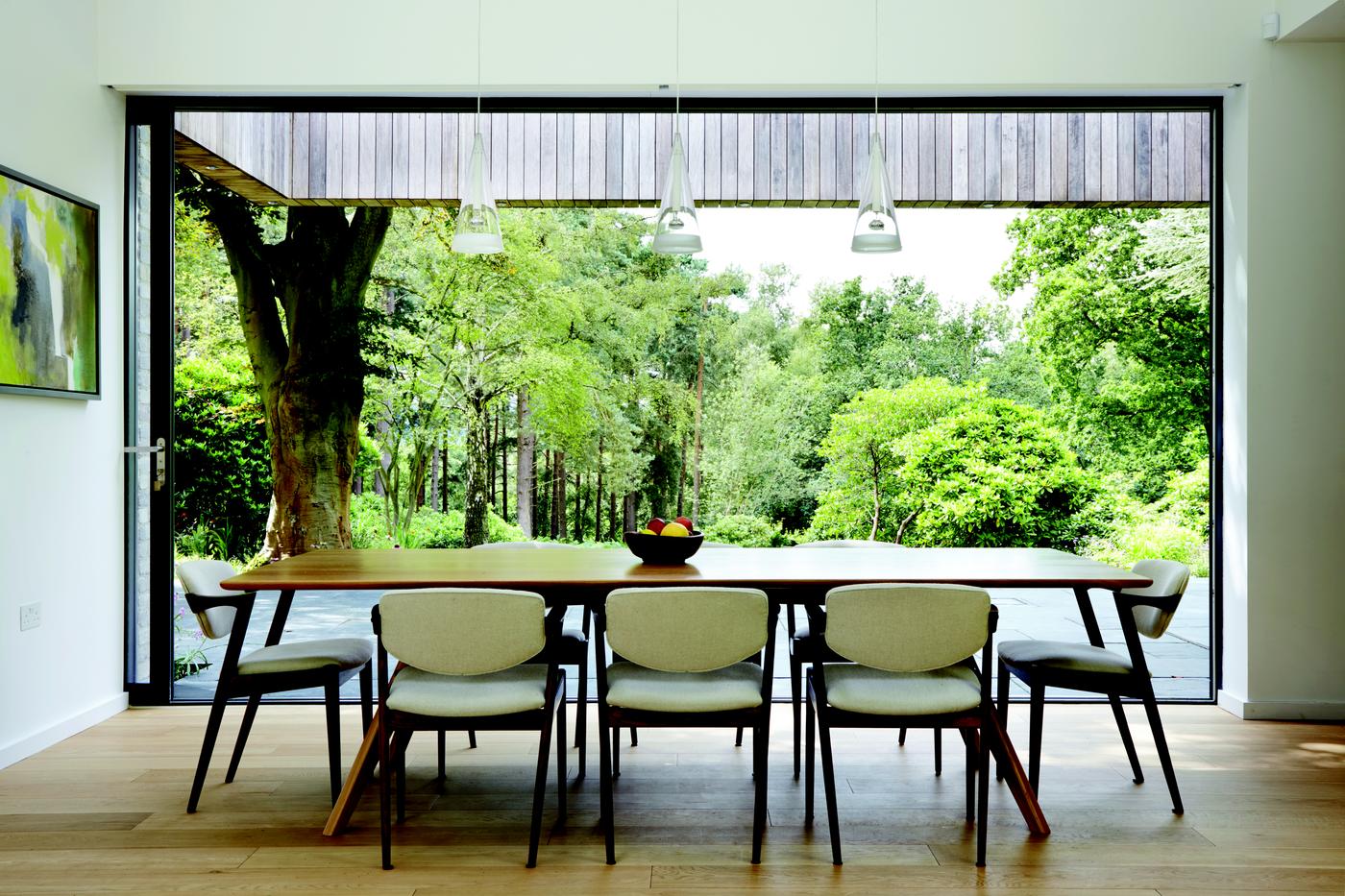
Bespoke contemporary kitchen
Choosing the right fitted kitchen for your home
Ultimately, choosing between Shaker and contemporary cabinetry comes down to the character you want to create and how that design will work within your home.
If you appreciate traditional detailing, visible craftsmanship and a style that can be adapted through colour and finish, a Shaker kitchen may be the right choice. If you prefer clean lines, restrained detailing and an uncluttered overall appearance, a contemporary kitchen may suit you better.
For many homeowners, however, the best solution lies somewhere between these descriptions.
At Treske, the design process is personal to each client. By considering the property, available space, practical requirements and individual preferences together, we can develop a fitted kitchen that feels considered rather than simply belonging to a particular category.
Whether your preference is for a luxury Shaker kitchen, a clean contemporary design or a combination of the two, a bespoke approach provides the flexibility to create a kitchen designed around the way you live.